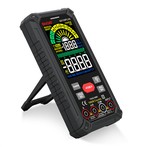
First of all, in the pointer multimeter and digital multimeter resistance file output voltage is not the same, the general pointer multimeter it outputs the highest voltage is 9 volts, while the digital multimeter is generally the highest output voltage is 3 volts, at the same time not only their output voltage is not the same, we choose a different gear in the measurement, the output voltage is not the same, the digital multimeter output voltage from 1.0 volts to 3.0 volts are available. The output voltage of digital multimeter is from 1.0 volt to 3.0 volt, and the output voltage of its resistance file is generally higher than that of digital multimeter. The output voltage of the pointer multimeter is greater than the voltage drop of diode, and the diode is able to conduct, while the digital multimeter is sometimes smaller than the voltage drop of diode, causing the diode not to be able to conduct, and this will be caused by infinite forward and reverse resistance in the measurement of the diode.
Secondly, the voltage drop characteristics of the secondary tube is not the same, will also cause us to choose the pointer multimeter resistance file to measure the secondary tube with a digital multimeter to measure the results of the secondary tube has a bias, for example: silicon tube and germanium tube general voltage drop value between {{0}}.3 volts to 0.6 volts, but some of the more special secondary tubes, such as high-voltage diodes, the conduction voltage drop is relatively large generally to reach 0.7 volts or more, and our digital multimeter Resistance file voltage is low, and can not be diode conduction, so the measurement will cause the resistance value will appear infinite.
We use the digital multimeter to measure the diode is good or bad, the best choice of diode gear, digital multimeter diode gear is generally in the 2.6 volts or so, generally greater than the diode's forward voltage drop, the diode can conduct in the forward direction.